
Cold calling is a direct outreach method where a salesperson contacts a prospect who has had no prior relationship with them. In the Australian B2B market, it remains one of the most effective ways to reach decision-makers. 57% of C-level and VP buyers still prefer phone calls over other channels. That number should settle any debate about whether the phone is dead. The Australian Communications and Media Authority (ACMA) governs telemarketing rules in Australia, so every outbound program must comply with the Do Not Call Register Act 2006. Within those rules, cold calling delivers results that email and social media rarely match at the same speed.
What are the best times to cold call in Australia?
Timing is the single most controllable variable in any outbound program. Mid-morning and late afternoon are the best cold calling windows, specifically 10:00–11:30 AM and 3:00–5:00 PM. Tuesday through Thursday are the top days. That pattern holds across industries because prospects are settled into their workday but not yet consumed by end-of-day tasks.
Monday mornings are the worst time to call. Buyers are clearing their inboxes, attending team standups, and mentally preparing for the week. Friday afternoons are equally unproductive. Prospects are winding down, and even a strong pitch lands poorly when someone is already thinking about the weekend.
- Tuesday to Thursday: Peak engagement days for B2B prospects across Australia
- 10:00–11:30 AM: Prospects are past their morning routine and receptive to conversation
- 3:00–5:00 PM: Decision-makers often have more flexibility after lunch meetings
- Avoid Monday mornings: Low receptivity and high internal meeting load
- Avoid Friday afternoons: Prospects disengage quickly and rarely commit to next steps
Pro Tip: Adjust your calling window by buyer role. A CFO in Sydney's financial district is often in meetings until 10:30 AM, while a procurement manager in Brisbane may be most reachable at 8:45 AM before their team arrives. Test two windows per segment and track your connect rate by time slot.
Industry also shapes timing. Construction and trades in Australia often start early, making 7:30–8:30 AM a viable window. Professional services firms in Melbourne's CBD tend to follow the standard 10:00–11:30 AM pattern. Knowing your buyer's daily rhythm is not optional. It is the difference between a live conversation and a voicemail.

How do you write a cold call script for the Australian market?
A cold call script for Australia works best as a framework, not a word-for-word reading. The goal is to sound like a prepared professional, not a telemarketer. Australian buyers respond poorly to scripted pitches that feel rehearsed. They value directness, brevity, and respect for their time.
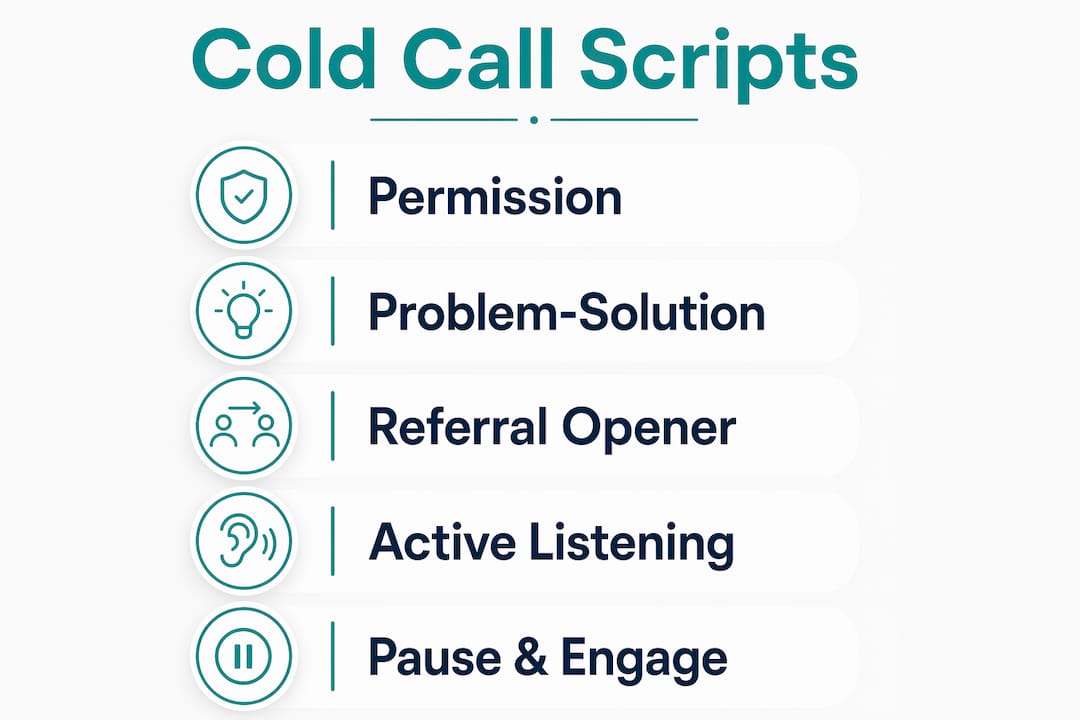
The most effective opener is a pattern interrupt. Effective cold calls start with an opener that acknowledges the call is cold and asks permission to speak for 27–30 seconds. A simple example: "Hey [Name], this is [Your Name] from [Company]. I'll be upfront, this is a cold call. Do you have 27 seconds to hear why I'm reaching out?" That opener disarms the prospect and earns initial attention without deception.
After the opener, structure your call around three elements:
- A clear reason for calling: State the specific business problem you solve, not a list of features
- A discovery question: Ask one question that prompts the prospect to reflect on their current situation
- A low-friction next step: Propose a 15-minute call or a specific date, not an open-ended "let's connect sometime"
Script frameworks that work in the Australian market include the problem-solution format, the referral-based opener, and the quick pitch. The problem-solution format names a pain point common in the prospect's industry, then positions your solution in one sentence. The referral-based opener mentions a mutual connection or a company similar to theirs that you have worked with. The quick pitch compresses your value into two sentences and immediately invites a response.
Pro Tip: Top-performing callers internalize their scripts so they can focus on active listening instead of reading from a page. Record yourself, listen back, and cut any phrase that sounds unnatural when spoken aloud.
The first 27 seconds of a call determine whether the prospect stays on the line. Pausing after asking permission is not awkward silence. It is a deliberate technique that prompts the prospect to engage rather than hang up. Most callers rush past this moment. The ones who pause consistently book more meetings.
What tools and routines support successful cold calling in Australia?
Data quality is the foundation of any outbound program. B2B data decays at approximately 2.1% per month, which means a list built six months ago has lost more than 12% of its accuracy. Lists should be refreshed every six weeks to maintain reliable connect rates. Calling stale data wastes time and damages your team's morale.
The performance gap between average and top teams comes down to data targeting. Top cold calling teams achieve up to 11.3% meetings booked versus a 2.7% average. That gap is not explained by script quality or caller talent. It is explained by verified, targeted direct dials on fresh data. Dialing a mobile number for the right decision-maker at the right company beats dialing a switchboard number for a generic contact every time.
| Data practice | What it means in practice |
|---|---|
| Direct dial verification | Confirm mobile or direct numbers before dialing to avoid gatekeepers |
| Role-based targeting | Filter lists by job title, seniority, and department relevant to your offer |
| Six-week refresh cycle | Update contact records every six weeks to stay below 2.1% monthly decay |
| Intent signal layering | Prioritize accounts showing buying signals such as job postings or funding news |
| CRM integration | Log every call outcome immediately to track patterns and refine targeting |
The power-hour method structures calling into focused 90-minute blocks with no distractions. The goal is 60 dial attempts per session. Two daily power hours on Tuesday through Thursday mornings produce the highest output for SDRs. After each session, take a 15-minute break before the next block.
Physical habits matter more than most callers realize. Standing while calling improves vocal energy and projects confidence. Staying hydrated keeps your voice clear across a full session. Multitasking during calls, whether checking email or scrolling LinkedIn, kills your listening quality and prospects notice.
Pro Tip: High connect-rate programs combine strict data hygiene with a multichannel cadence that integrates LinkedIn touches and email before and after calls. A prospect who has seen your name twice before you call is significantly more likely to engage.
How do you handle objections on cold calls in Australia?
Objections are not rejections. They are requests for more information delivered in a defensive tone. The fastest way to lose a prospect is to argue with their objection. The fastest way to keep them is to acknowledge it and ask a follow-up question.
Most common objections can be addressed by acknowledging and asking a follow-up question that forces a clean, respectful conversation. Here are five objections you will hear regularly in Australia and how to respond:
- "I'm not interested." Respond with: "That's fair. Can I ask what you're currently using to solve [specific problem]?" This keeps the conversation open without being pushy.
- "Send me an email." Respond with: "Happy to. What's the one thing you'd want me to address in it?" This qualifies intent before you spend time writing.
- "We already have a supplier." Respond with: "Good to know. When did you last benchmark what you're getting against what else is available?" This plants a seed without attacking their current choice.
- "Now is not a good time." Respond with: "No problem. When would be better, Tuesday or Thursday next week?" This moves toward a specific commitment rather than an open-ended callback.
- "We don't have the budget." Respond with: "Understood. Is budget the only thing holding this back, or is there another concern?" This separates a real objection from a deflection.
Persistence of 3–5 call attempts is optimal. Research shows 93% of conversations happen by the third call. Beyond five attempts, returns diminish sharply and you risk damaging the relationship before it starts. Space your attempts across several days and vary the time of day on each attempt.
Silence is an underused tool in cold calling. After asking a question, stop talking. Australian buyers respond well to callers who give them room to think. Rushing to fill silence signals anxiety and reduces your credibility. Track every call outcome in your CRM. Patterns in objection types reveal gaps in your targeting or messaging that no amount of practice alone will fix.
Key Takeaways
Successful cold calling in Australia requires verified data, structured timing, a permission-based opener, and a disciplined cadence of 3–5 attempts per prospect.
| Point | Details |
|---|---|
| Timing drives connect rates | Call Tuesday through Thursday, 10:00–11:30 AM or 3:00–5:00 PM for peak engagement. |
| Data quality beats volume | Refresh contact lists every six weeks to stay ahead of the 2.1% monthly decay rate. |
| Permission-based openers work | Acknowledge the cold call and ask for 27–30 seconds before pitching anything. |
| Limit attempts to 3–5 per prospect | Most conversations happen by the third call; beyond five, returns drop sharply. |
| Multichannel cadence multiplies results | Combine calls with LinkedIn and email touches to increase prospect familiarity before dialing. |
What I've learned about cold calling that most guides won't tell you
The biggest myth in Australian sales is that cold calling is a numbers game. It is not. Volume without targeting is just noise. I have watched teams dial 200 calls a day and book fewer meetings than teams dialing 60 calls with verified direct dials and a tight account list. The math is not in the dialing. It is in the preparation before the first call goes out.
Australian buyers are direct. They do not want a long preamble or a feature dump. They want to know immediately why you are calling and whether it is relevant to them. The callers who respect that and get to the point in the first 15 seconds consistently outperform those who open with pleasantries. That cultural directness is an advantage for structured callers, not a barrier.
The other thing I have seen consistently is that discipline in routine separates average performers from top ones. The power-hour structure is not just a productivity trick. It protects your energy and your focus across a full calling day. Callers who block their time, stand at their desk, and eliminate distractions during sessions book more meetings per hour than those who call sporadically between other tasks.
Cold calling works in Australia. The evidence is clear. What fails is the undisciplined, untargeted version of it. Build the routine, clean the data, and treat every call as a conversation worth having.
— Rakhveer
How Rakisolutions helps Australian businesses build outbound pipelines
Australian B2B companies that want consistent pipeline growth without building an internal SDR team from scratch have a direct path forward with Rakisolutions. Rakisolutions delivers SDR as a Service for companies targeting the ANZ and APAC markets, combining verified data sourcing, structured call cadences, and multichannel outreach into a single managed program.
Every engagement starts with account research and direct dial verification, so your team reaches the right decision-makers from day one. Rakisolutions manages the full outbound cycle, from list building and call scripting to LinkedIn sequencing and meeting booking, with guaranteed meeting targets built into the program. If your pipeline is inconsistent or your outreach is not converting, the outbound growth program gives you a proven structure without the overhead of hiring and training in-house.
FAQ
Is cold calling legal in Australia?
Cold calling is legal in Australia but regulated by the ACMA under the Do Not Call Register Act 2006. Businesses must screen their lists against the Do Not Call Register before dialing.
What are the best days to cold call in Australia?
Tuesday, Wednesday, and Thursday are the most effective days. Prospects are most reachable and receptive during mid-week, particularly in the 10:00–11:30 AM and 3:00–5:00 PM windows.
How many times should you call a prospect before moving on?
Three to five attempts is the recommended cadence. Research shows 93% of conversations happen by the third call, and returns drop sharply beyond five attempts.
Do Australian buyers respond well to cold calls?
Yes. 57% of C-level and VP buyers prefer phone calls over other outreach channels, making cold calling one of the most direct ways to reach senior decision-makers in Australia.
How do I improve my cold call connect rate?
Refresh your contact list every six weeks, dial verified direct numbers, and call during peak windows on Tuesday through Thursday. Data quality and timing account for most of the performance gap between average and top-performing teams.