
Tech sales in Australia is defined as the professional practice of selling software, cloud platforms, and technology services to business buyers, and it sits at the center of one of the country's fastest-growing industries. The software suppliers sector reached $33.8 billion in market size as of 2026, with 1,556 active businesses competing for enterprise and mid-market accounts. Roles like Technical Sales Manager pay an average of $120,000 annually. Whether you are a sales professional building a career or a company hiring to grow pipeline, understanding how this market actually works in 2026 is the difference between consistent quota attainment and chronic underperformance.
What are the current tech sales jobs and salary expectations in Australia?
Technology sales jobs in Australia span a clear progression from entry-level outreach roles to senior enterprise positions, each with distinct skill requirements and pay bands.
The most common roles in the market today include:
- SDR (Sales Development Representative): Focuses on outbound prospecting and qualifying inbound leads. Entry-level, typically 0–2 years of experience required.
- BDR (Business Development Representative): Similar to SDR but often oriented toward net-new account hunting. Frequently the first step into a dedicated outbound function.
- Mid-Market Account Executive: Owns a named account list, manages full sales cycles, and carries a quota. Requires 2–5 years of prior sales experience.
- Enterprise Account Executive: Manages large, complex accounts with long sales cycles and multi-stakeholder buying committees. Typically requires 5+ years of quota-carrying experience.
- Technical Sales Manager: Bridges technical product knowledge and commercial outcomes. The average salary sits at $120,000, with a base pay range of $90,000 to $138,000 as of july 2026.
Compensation in IT sales careers in Australia follows a base-plus-variable structure. On-target earnings (OTE) for mid-market account executives typically run 50–100% above base salary when quota is met. Senior enterprise roles command higher OTEs, reflecting the complexity and deal size involved.
Career progression in Australian tech sales moves from SDR and BDR roles through to enterprise account executive and sales management positions. Each step requires demonstrable quota attainment, not just tenure. Companies hiring for senior roles expect 3–10 years of specific quota-carrying software or cloud sales experience, with a clear focus on consultative selling to C-level executives. That standard reflects the sophistication buyers now expect from their vendors.
Pro Tip: When applying for tech sales roles in Australia, quantify your quota attainment as a percentage of target, not just total revenue closed. Hiring managers in this market read that number first.
How do successful professionals sell software in Australia?
Selling software in Australia requires a consultative approach, not a product pitch. The best performers align technology solutions to specific business outcomes by asking visionary questions before presenting any features. This shifts the conversation from "what does our product do" to "what does your business need to achieve in the next 12 months."

Top Australian tech firms prioritize consultative account selling that ties technology directly to measurable business results. That means reps need to understand their buyer's P&L pressures, not just their IT stack. A rep who can speak to cost reduction, revenue growth, or risk mitigation in the buyer's language closes deals faster than one who leads with product specifications.
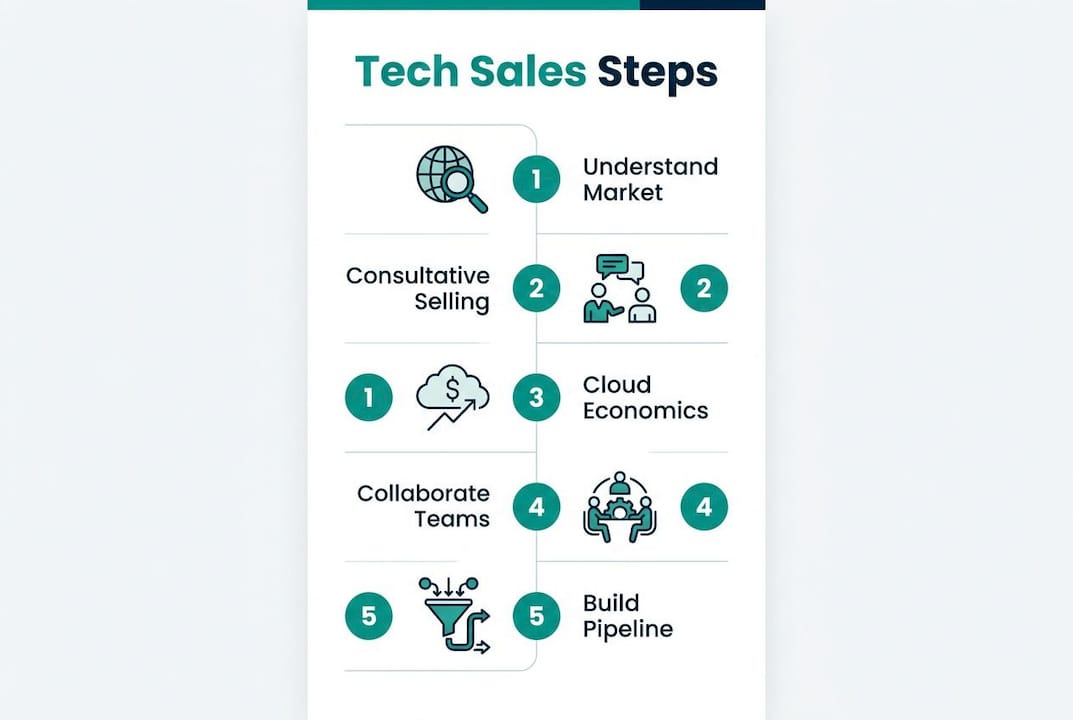
Cross-functional collaboration is equally critical. Successful reps in this market work closely with solutions engineers, marketing teams, and product managers to build credible proposals. No single rep wins a complex enterprise deal alone. The ability to coordinate internal resources without formal authority is a skill that separates average performers from consistent quota carriers.
The hybrid selling environment in Australia adds another layer of complexity. Face-to-face meetings in Sydney and Melbourne remain critical for trust-building, even as digital channels handle early-stage prospecting and qualification. The practical reality is that digital outreach opens the door, but a well-run in-person meeting in a CBD office closes it.
Key traits that define top performers in Australian software sales:
- Asking business-outcome questions before presenting solutions
- Managing multi-stakeholder buying committees with a clear champion strategy
- Coordinating internal teams including engineering, legal, and finance during complex deals
- Maintaining pipeline discipline through weekly forecast reviews and deal inspection
- Building long-term relationships that generate referrals and expansion revenue
Pro Tip: Schedule quarterly business reviews with your top accounts even when there is no active deal. These meetings surface expansion opportunities before competitors do.
What are the specific challenges and opportunities in Australian tech sales markets?
The industry revenue growth of 9.7% annually from 2021 to 2026 signals strong demand, but it also attracts global competition. International software vendors now operate local teams in Sydney and Melbourne, raising the bar for every rep in the market. Local sales professionals compete not just on product quality but on relationship depth and market knowledge.
The four most significant dynamics shaping the market right now are:
- Global vendor expansion: Large international software companies have established direct sales teams in Australia, compressing margins for local resellers and forcing differentiation on service and expertise.
- Cloud economics as a sales skill: Understanding committed cloud spend, marketplace listings, and co-sell motions with hyperscalers like AWS, Azure, and Google Cloud is now a core competency. Deals leveraging committed cloud spend bypass traditional procurement hurdles, which shortens sales cycles significantly.
- Fintech and SaaS scale-up growth: Fast-growing Australian Fintech and SaaS companies are hiring aggressively. These environments reward reps who thrive in ambiguous environments and can manage complex internal and customer buying processes without a fully built sales playbook.
- Procurement sophistication: Enterprise buyers in Australia now run formal RFP processes, involve legal and security teams early, and expect vendors to demonstrate ROI before signing. Reps who cannot navigate procurement complexity lose deals to those who can.
"Proficiency in cloud economics, hyperscaler marketplace co-sell strategies, and navigating enterprise agreements is now more valuable than any single technical certification in Australian enterprise sales. Reps who understand how AWS Marketplace or Azure co-sell programs work can compress deal timelines and reduce procurement friction in ways that product knowledge alone cannot achieve."
The Fintech and SaaS scale-up segment deserves particular attention. These companies move fast, change direction often, and expect their sales hires to build process from scratch. Reps who have only worked in mature, process-heavy organizations often struggle in this environment. The opportunity is real, but so is the adjustment required.
How can companies and sales teams build pipeline in Australia's tech sector?
Pipeline execution in Australian tech sales requires discipline across multiple channels, not reliance on any single source. The most consistent performers build pipeline through outbound prospecting, partner referrals, and marketing-generated inbound, then manage each stream differently.
The critical distinction every sales leader must make is between outbound hunters and inbound managers. Outbound pipeline builders and inbound lead managers require different skills, different metrics, and different coaching approaches. Mixing both responsibilities in one role without clear prioritization produces mediocre results in both areas.
Practical tactics for building and managing pipeline in the Australian market:
- Segment your accounts by industry and deal size before any outreach. Generic messaging fails in a market where buyers receive dozens of vendor approaches weekly.
- Use multi-channel sequences combining LinkedIn, email, and phone. A single-channel approach misses buyers who prefer different communication methods.
- Qualify hard and early. Australian enterprise buyers will engage in discovery calls without any real buying intent. Reps who do not qualify budget, authority, need, and timeline waste months on deals that never close.
- Map the buying committee on every deal above a certain deal size threshold. Enterprise deals in Australia routinely involve IT, finance, legal, and the C-suite. Missing one stakeholder kills deals late in the cycle.
- Track pipeline coverage ratio weekly. A healthy pipeline carries three to four times the quarterly quota target. Anything below that signals a prospecting problem, not a closing problem.
The partner channel deserves more attention than most Australian tech sales teams give it. Co-sell motions with hyperscalers and system integrators generate qualified pipeline that arrives with built-in credibility. A referral from an AWS account manager carries more weight with an enterprise buyer than a cold outbound sequence.
Pro Tip: Build relationships with hyperscaler partner managers before you need them. A 30-minute introduction call with an AWS or Azure partner manager can open doors to co-sell opportunities that take months to generate through direct outbound.
Key Takeaways
Tech sales in Australia rewards professionals who combine consultative selling skills, cloud economics knowledge, and disciplined pipeline execution across multiple channels.
| Point | Details |
|---|---|
| Market size and growth | Australia's software sector reached $33.8 billion in 2026, growing at 9.7% annually. |
| Salary benchmarks | Technical Sales Managers earn an average of $120,000, with senior roles requiring 3–10 years of quota-carrying experience. |
| Consultative selling wins | Top performers align technology to business outcomes through visionary questioning, not product pitching. |
| Cloud economics matter | Mastering co-sell motions with AWS, Azure, and Google Cloud shortens sales cycles and bypasses procurement friction. |
| Pipeline discipline is non-negotiable | Healthy pipelines carry three to four times the quarterly quota target, built across outbound, inbound, and partner channels. |
What I've learned about winning in Australian tech sales
The conventional wisdom says digital-first selling has changed everything. It has not changed the fundamentals. Every major deal I have seen close in the Australian market had a face-to-face moment somewhere in the cycle. Sydney and Melbourne buyers still make trust decisions in person. Reps who treat in-person meetings as optional leave deals on the table.
The insight that surprises most people entering this market is how much cloud economics matters compared to product knowledge. A rep who understands how AWS Marketplace committed spend works, or how an Azure co-sell motion reduces procurement friction, has a structural advantage over a rep who simply knows the product better. Buyers at enterprise level are not buying features. They are buying outcomes within a financial framework they already have in place.
The scale-up Fintech and SaaS segment is where I see the most opportunity for reps willing to build process from scratch. These companies pay well, move fast, and reward people who can operate without a complete playbook. The reps who struggle there are the ones waiting for someone to hand them a territory and a list. The ones who thrive go find their own pipeline from day one.
Cross-functional collaboration is the underrated skill in this market. The reps who consistently hit quota are not the loudest voices in the room. They are the ones who know how to get their solutions engineer, their legal team, and their product manager aligned behind a deal. That coordination skill does not show up on a resume, but it shows up in quota attainment numbers.
— Rakhveer
How Rakisolutions supports pipeline growth in Australian tech sales
Building consistent pipeline in the Australian tech market takes more than a good product and a motivated rep. It takes a structured outbound function with the right account targeting, messaging, and multi-channel execution to reach decision-makers at scale.
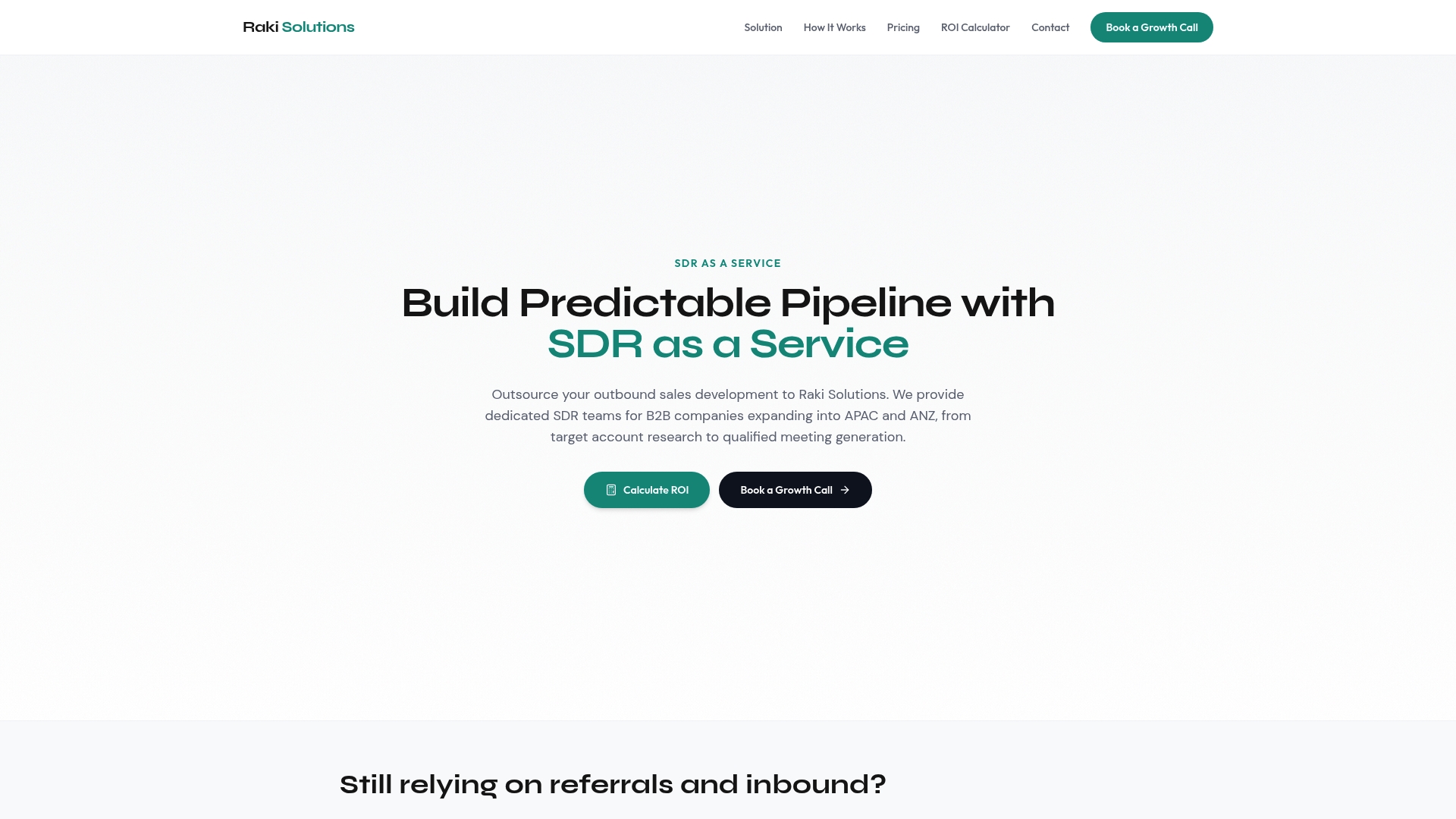
Rakisolutions delivers SDR as a Service built specifically for B2B companies expanding into the APAC and ANZ markets. The model gives technology companies a dedicated outbound team focused on generating qualified meetings and measurable pipeline, without the overhead of building an internal SDR function from scratch. For companies entering the Australian market or scaling an existing presence, Rakisolutions provides the account research, outreach execution, and meeting guarantees that turn pipeline targets into commercial outcomes.
FAQ
What is the market size of tech sales in Australia?
Australia's software suppliers industry reached $33.8 billion in 2026, with 1,556 active businesses operating in the sector. The industry grew at an annualized rate of 9.7% from 2021 to 2026.
What salary can I expect in a tech sales role in Australia?
Technical Sales Managers in Australia earn an average of $120,000 annually, with a base pay range of $90,000 to $138,000. Entry-level SDR and BDR roles pay significantly less, with compensation increasing sharply at the account executive and management levels.
How many years of experience do senior tech sales roles require?
Senior enterprise tech sales roles in Australia typically require 3–10 years of quota-carrying software or cloud sales experience. Consultative selling skills and a track record of closing complex deals matter more than certifications.
Why does cloud economics matter in Australian tech sales?
Understanding co-sell motions with hyperscalers like AWS, Azure, and Google Cloud bypasses procurement hurdles and shortens deal timelines. Enterprise buyers often have committed cloud spend they need to deploy, and reps who know how to structure deals within that framework win faster.
What makes Australian Fintech and SaaS sales environments different?
Australian Fintech and SaaS scale-ups favor reps who thrive in ambiguous environments and can manage complex buying processes without a fully defined playbook. These roles reward pipeline builders who create their own opportunities rather than waiting for inbound demand.