Org chart mapping, in the SDR context, means reconstructing a target account's buying committee: the roles, reporting lines, and influence relationships that determine who actually signs off on a purchase. It is not about drawing a tidy hierarchy for HR. It is about knowing which three people you need to reach before anyone returns your calls. Buying committees often include several stakeholders, and missing even one influential blocker can stall a deal for months. The fastest first move: pick one high-value APAC or ANZ target account, open LinkedIn Sales Navigator, and identify three likely members of the Decision Making Unit (DMU) before you write a single outreach message.
- Start with the economic buyer (the person who controls budget)
- Find the champion (the internal advocate who wants the problem solved)
- Identify at least one blocker or procurement contact so you are not surprised later
Key Takeaways
Org chart mapping works when it is treated as a live CRM process, not a one-time research task, and when contact coverage, accuracy, and meeting rates are tracked consistently.
| Point | Details |
|---|---|
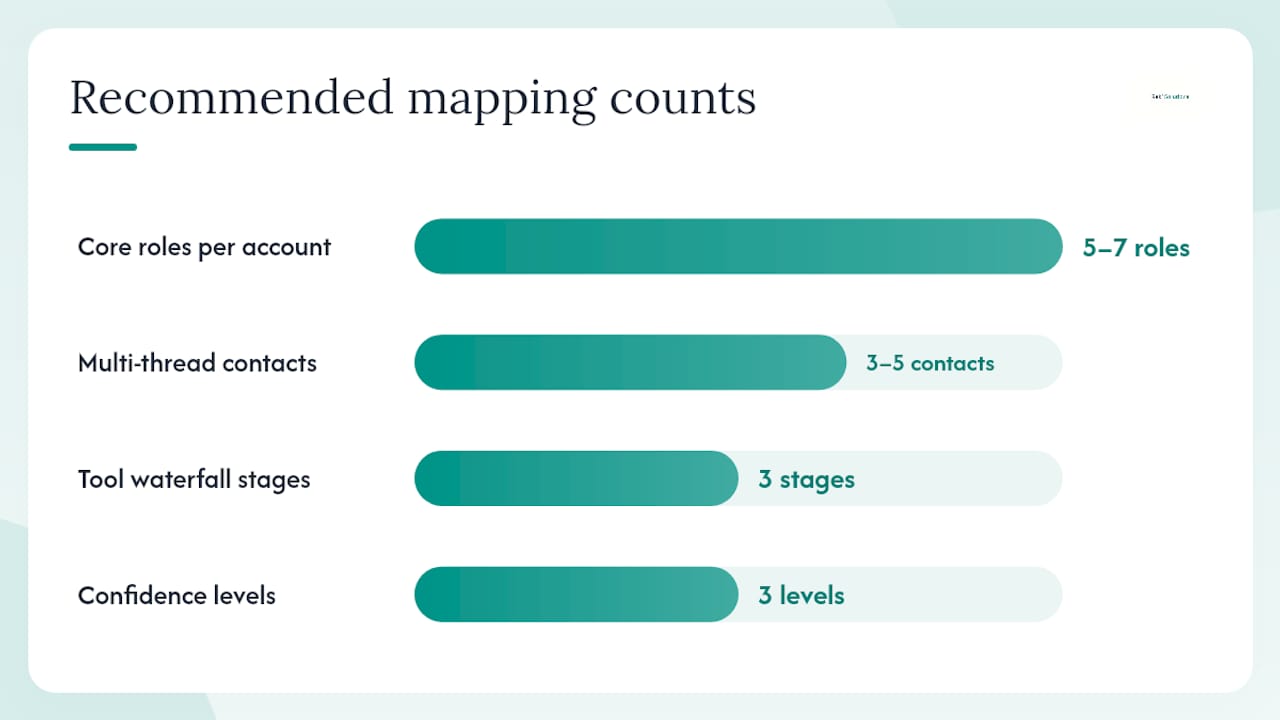
| Map the full DMU | Identify five to seven core roles per account and multi-thread three to five contacts to avoid stalled deals. |
| Layer your tools | No single provider covers APAC well; waterfall from LinkedIn Sales Navigator through Apollo.io or ZoomInfo to Hunter.io for verification. |
| Validate before outreach | Tag every contact High/Medium/Low confidence and verify email before importing to your sequence. |
| Adapt for each APAC market | Australia and Singapore move fast; India and Japan require relationship-first mapping with deeper title expansion. |
| Raki Solutions as a managed path | Raki Solutions provides dedicated SDR teams for APAC/ANZ that handle research, mapping, outreach, and guaranteed qualified meetings. |
Table of Contents
- How to build an org map for one target account
- Which tools give you the best APAC/ANZ coverage?
- How to validate contacts and build CRM-ready outreach sequences
- APAC and ANZ mapping adjustments for US-based SDR teams
- KPIs and maintenance cadence for org chart mapping
- Org map template and a completed example
- Why disciplined org mapping changes pipeline outcomes
- Raki Solutions handles the mapping and the meetings for APAC/ANZ
- Sources
How to build an org map for one target account
A repeatable process matters more than the perfect tool. Here is a seven-step workflow that produces a CRM-ready buying-committee map.
-
Confirm ICP fit. Before spending time on mapping, verify the account meets your ideal customer profile: company size, industry, tech stack signals, recent funding, or hiring patterns. A job post for a "Head of Revenue Operations" in Sydney is a live signal.
-
Surface core DMU roles. Map five to seven core roles: economic buyer, champion, end users, influencers, procurement, and blockers. In APAC, add a "local approver" node for markets where regional sign-off sits separately from global HQ.
-
Expand titles for regional equivalents. An "economic buyer" in Australia might carry the title "Country Manager" or "VP Commercial APAC." In Japan, look for 部長 (buchō, department head) or 取締役 (torishimariyaku, director). In India, "Business Head" or "GM" often maps to what a US team would call a VP. Build a title-variant list before you search.
-
Map reporting lines and inferred influence. LinkedIn org signals, press releases, and company About pages reveal who reports to whom. When direct reporting data is unavailable, infer from seniority, department, and cross-functional mentions in press coverage.
-
Gather contact points. Collect work email, LinkedIn URL, and direct phone where available. Use a waterfall approach: start with free sources, then mid-tier tools, then premium providers.
-
Assign a confidence rating to each node. Tag every contact as High (verified from two or more independent sources), Medium (one source, recent activity), or Low (inferred, unverified). This prevents outreach to stale or wrong contacts.
-
Import to CRM and assign an owner. Each node becomes a contact record linked to the account. Fields: role, role_type, reports_to, influence_score, verification_sources, last_verified_date, owner.
Pro Tip: Job postings are one of the most underused signals in org mapping. A company hiring a "Senior Enterprise Account Executive, APAC" tells you they are scaling a sales team, which usually means a new VP of Sales or CRO is either in seat or incoming. Check the posting's requirements for clues about the tech stack and internal reporting structure.
Which tools give you the best APAC/ANZ coverage?
No single tool covers APAC well. Layering multiple data providers and expanding title searches into local-language equivalents preserves higher contact fill rates across non-English markets. Here is how the main tools stack up for buying-committee mapping:
- LinkedIn Sales Navigator is the strongest starting point for hierarchy depth and role discovery. Boolean title searches, the "TeamLink" feature, and account maps give you structural signals no database can fully replicate. Coverage in ANZ and Singapore is strong; Japan and Korea require native-language title searches.
- ZoomInfo offers deep contact databases with verified emails and direct dials, strong CRM integration (Salesforce, HubSpot), and intent data overlays. APAC coverage is improving but still thinner than North America, particularly for SMB contacts in Southeast Asia.
- Apollo.io combines a large contact database with built-in sequencing and email verification. Its pricing model is accessible for smaller SDR teams, and the enrichment API integrates cleanly with most CRMs. Good for mid-market APAC accounts.
- Clearbit (now part of HubSpot) excels at company-level enrichment and tech stack identification, which helps you confirm ICP fit before investing time in full org mapping. Less strong for individual contact discovery in APAC.
- Crunchbase is the go-to for funding events, leadership changes, and company growth signals in APAC tech. Use it to trigger mapping when a target account raises a new round or appoints a new C-suite hire.
- Hunter.io is a fast, low-cost email finder and verifier. Use it to validate email patterns and fill gaps after your primary tools have run. Its domain search reveals the email format a company uses, which helps you construct contacts for roles you found on LinkedIn but could not enrich elsewhere.
| Tool | Hierarchy depth | Contact accuracy | APAC freshness | Pricing model | CRM integration | Enrichment automation |
|---|---|---|---|---|---|---|
| LinkedIn Sales Navigator | High | High (role data) | Strong (ANZ, SG) | Subscription | Via third-party | Manual/API |
| ZoomInfo | High | High (verified) | Moderate | Subscription | Native (SF, HubSpot) | Strong |
| Apollo.io | Moderate | Moderate–High | Moderate | Freemium/subscription | Native | Strong |
| Clearbit | Moderate | High (company) | Moderate | Subscription | Native (HubSpot) | Strong |
| Crunchbase | Low (signals only) | Low (no emails) | Good (funding data) | Freemium/subscription | Limited | Limited |
| Hunter.io | Low | High (email verify) | Global | Freemium/subscription | Via Zapier | Moderate |
Pro Tip: Run a waterfall: LinkedIn Sales Navigator for role discovery → Apollo.io or ZoomInfo for contact enrichment → Hunter.io for email verification. For Japan and Korea, add a native-language title expansion step before the enrichment run.
How to validate contacts and build CRM-ready outreach sequences
Validation before outreach is not optional. Sending to stale contacts damages deliverability and wastes sequence slots.
Validation checklist for each node:
- Triangulate the role: LinkedIn current position + company website team page + press mention or GitHub profile
- Verify the email: run through Hunter.io or an SMTP check tool before importing
- Check for recent activity: a LinkedIn post in the last 30 days or a job-change notification confirms the contact is active
- Tag confidence level (High/Medium/Low) and log the verification source and date in the CRM
Once validated, the org map drives outreach directly. Treating org chart intelligence as strategic data integrated into ABM and CRM workflows increases C-level engagement and conversion. A practical six-step multi-channel cadence for a three-contact account:
- Day 1: LinkedIn connection request to the champion (personalized note referencing a recent post or company news)
- Day 3: Email to the champion (problem-led, short)
- Day 5: LinkedIn message to the economic buyer (one-line, reference the champion's team)
- Day 7: Email to the economic buyer (business-outcome framing)
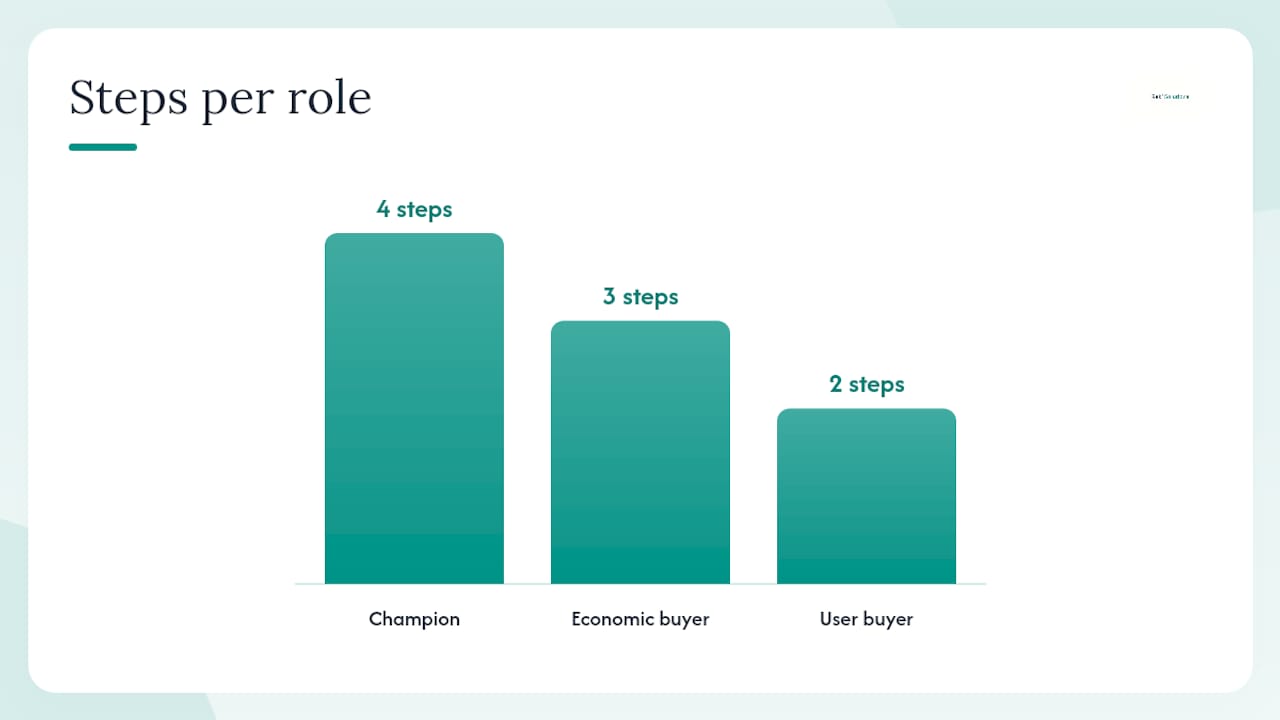
- Day 10: Call attempt to champion; email to user buyer
- Day 14: Final email to all three contacts (light breakup, leave door open)
Stagger start dates by two to three days across contacts so all three do not receive your first touch on the same morning. For decision-maker sourcing tactics that support this sequencing, the Raki Solutions blog covers title expansion and multi-threading in detail.
Privacy and compliance checklist for cross-border contact research:
- Confirm the contact's country and applicable data law (Australia's Privacy Act, Singapore's PDPA, India's DPDP Act, GDPR for any EU nationals in APAC roles)
- Use only publicly available professional data (LinkedIn, company websites, press)
- Honor opt-out requests immediately and log them in the CRM
- Do not store personal data beyond the retention period your legal team specifies
APAC and ANZ mapping adjustments for US-based SDR teams
Regional context changes who you map and how you engage them. Australia and Singapore tend toward direct, fast decision-making, while India and Indonesia require more relationship-driven approaches. That difference shows up in your org map before you send a single email.
Regional checklist:
- Australia/ANZ: Buying committees are typically smaller. The economic buyer often sits at Country Manager or CFO level. Direct outreach works. Skip the warm-up layers you would use in Japan.
- Singapore: Sophisticated, fast-moving buyers. Many APAC HQs are based here, so the Singapore contact may have regional authority over multiple markets. Confirm whether you are mapping a local or regional decision-maker.
- India: Relationship-first culture with longer cycles. The formal title may not reflect actual influence. Map one level deeper than you normally would and identify the internal champion before approaching the economic buyer.
- Japan: Consensus-driven (nemawashi process). Decision-making involves multiple layers. Search for 部長, 課長 (kachō, section chief), and 担当者 (tantōsha, person in charge) alongside English titles. A local partner or distributor often sits between you and the end buyer.
- Korea: Similar consensus norms. 팀장 (teamjang, team leader) and 이사 (isa, director) are common mid-level titles. Procurement often involves a separate purchasing department.
Pro Tip: When mapping a Japan or Korea account from the US, prioritize finding a local champion or channel partner first. Direct cold outreach to senior Japanese executives rarely converts without a warm introduction. Map the local partner's org as a parallel track.
KPIs and maintenance cadence for org chart mapping
Four KPIs tell you whether your mapping program is working:
- Coverage rate: mapped roles ÷ expected DMU roles. Target above 80% for priority accounts.
- Accuracy rate: verified contacts ÷ total mapped contacts. Below 70% means your enrichment stack needs adjustment.
- Meetings per mapped account: the clearest pipeline signal. Track separately for enterprise and mid-market APAC accounts, since enterprise cycles are longer.
- Time-to-first-verified-contact: how long from account selection to a validated, CRM-ready contact. Shorter cycles indicate a mature enrichment workflow.
Org chart data combined with intent signals increases conversion and C-level engagement when teams treat maps as living CRM objects rather than one-time research artifacts. That means assigning ownership and wiring alerts.
Maintenance schedule:
- Daily: Check high-priority accounts for LinkedIn job changes or news alerts
- Weekly: Run enrichment on newly added contacts; update confidence tags
- Monthly: Review accounts for org changes (new hires, departures, restructures)
- Quarterly: Full revalidation of all mapped contacts; archive stale nodes
Automate the trigger layer: set Google Alerts for target account names, use LinkedIn Sales Navigator's account alerts for job changes, and wire Crunchbase funding alerts to a Slack channel. Each trigger is a reason to update the map and potentially re-sequence outreach.
Org map template and a completed example
Every org map node should carry these fields:
- unique_id (e.g., ACC001-C03)
- account_name
- role (e.g., Economic Buyer)
- role_type (Champion / Economic Buyer / User Buyer / Influencer / Procurement / Blocker)
- title_variants (all regional title equivalents searched)
- reports_to_id
- influence_score (1–5)
- contact_email
- contact_phone
- verification_sources (e.g., LinkedIn + Hunter.io)
- owner (SDR name)
- last_verified_date
Completed example (anonymized):
| unique_id | role | role_type | title | influence_score | verification_sources | last_verified |
|---|---|---|---|---|---|---|
| — | Sarah T. | Economic Buyer | VP Commercial APAC | 5 | LinkedIn + ZoomInfo | March 2026 |
| — | James L. | Champion | Head of Sales Ops | 4 | LinkedIn + Apollo.io | March 2026 |
| ACC001-C03 | Priya M. | User Buyer | Revenue Ops Manager | 3 | LinkedIn + Hunter.io | March 2026 |
| — | Ken W. | Procurement | Procurement Lead | 2 | Company website | February 2026 |
CRM import steps:
- Export the template as a CSV with the column headers above
- In Salesforce: use Data Import Wizard, map columns to Contact fields, link to the parent Account record
- In HubSpot: use the Contacts import, map "reports_to_id" to a custom property, and tag each contact with a "DMU Role" property
For a ready-to-use template and APAC lead research playbook, the Raki Solutions blog has downloadable resources aligned to this workflow.
Why disciplined org mapping changes pipeline outcomes
The teams that consistently hit meeting targets in APAC are not the ones with the biggest contact databases. They are the ones who know exactly which three people to call at each account and why those three matter.
Mapping buying committees with discipline, assigning confidence ratings, and maintaining maps as live CRM objects removes the guesswork from multi-threading. It also surfaces the accounts worth deprioritizing early, before an SDR spends three weeks chasing a contact who left the company in January.
The method described in this guide is operational, not theoretical. It is designed to be executed this week, on real accounts, with tools most SDR teams already have access to.
Raki Solutions handles the mapping and the meetings for APAC/ANZ
Building and maintaining org maps across a dozen APAC accounts while running live outreach sequences is a full-time job. Raki Solutions delivers that as a managed service: dedicated SDR teams handle target account research, decision-maker sourcing, multi-channel outreach across email, LinkedIn, and calls, and guaranteed qualified meetings in APAC and ANZ markets.
The result is a predictable pipeline without the overhead of hiring, training, and managing an in-house SDR team for a region most US-based sales leaders are still learning. Clients get weekly reporting, campaign optimization, and a clear meeting target from day one.
If you are ready to move faster in APAC, book a discovery call with Raki Solutions and get a scoped engagement within a week.
Sources
- AI Account Research | Automated Intelligence Gathering | The Smarketers
- How to Map the Buying Committee at a Target Account
- Best APAC Company Data Providers for B2B Sales in 2026
- Expanding into APAC in 2026: A Practical Playbook for B2B Companies | Growthential
- The Strategic Power of the Org Chart: A Guide to B2B Prospecting & Account Mapping